
Sally Ness, Director of Education - April 24, 2026
As we celebrate Earth Day this month, we are invited to pause and reflect on the natural world and our relationship with it. From Toddler through Middle School, we believe time outdoors is an essential element of healthy development for students. In addition to physical movement, research suggests that time outside supports concentration, creativity, and emotional well-being, among many other benefits. It offers children space to slow down, observe, and engage with their surroundings in meaningful ways.
In a Montessori environment, nature is not separate from learning, but deeply interconnected with it. From plant life to wooden materials to work with water, students continually interact with elements of the natural world both inside and outside the classroom. Even our youngest students begin to see themselves as caretakers of their environment, taking responsibility for the spaces and materials around them. This mindset—rooted in respect and care—naturally extends beyond the classroom and into how they begin to understand their place in the world.
Many parents have witnessed the wonder of a child discovering something in nature. During arrivals each morning, it is common to see a child proudly carrying a stick, leaf, or flower to share, filled with pure delight. In the rush of daily routines, it can be easy to move quickly from one place to another, but when we allow children unstructured time to observe and interact with nature, we nurture their curiosity and deepen their sense of connection. These small moments often become the most meaningful and memorable, as I’m sure you’ve experienced.
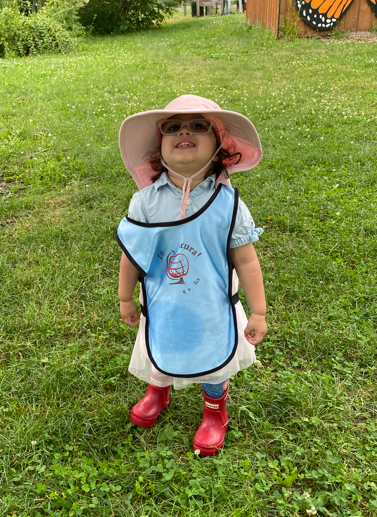
Outdoor time also lays an important foundation for environmental stewardship. Whether caring for a vegetable garden or a single plant, children begin to see themselves as part of something larger, an idea that closely aligns with Intercultural’s mission to cultivate global citizenship. This growing sense of connection fosters respect and responsibility, instilling a desire to care for and protect the world around them.
Even if you do not consider yourself particularly outdoorsy, or feel limited by your surroundings, there are many accessible ways to foster this connection. A visit to a nature museum, a walk through a local park or along the lake, or even sitting quietly under a tree can be meaningful experiences for both you and your child. Involving children in everyday conservation efforts such as recycling, composting, or conserving water also helps translate these values into action. In my own family, we have a tradition of going to the woods to pick up trash on or around Earth Day, and I encourage each of you to find a simple tradition of your own that honors and cares for the environment alongside your children.
